

Start with what the shore is telling you.
After a rain, walk from the house to the lake. Notice where water collects, where it cuts a path through bare soil and where it slows down. Those are the places to look first when you want to protect the shore and keep it easy to enjoy.
Keep roots in the ground
Retain the native plants that are already doing the work. Where the bank needs help, ask which grasses, sedges and shrubs suit its soil, slope and light.
Follow the rain
Look at downspouts, paths and the driveway. Keep runoff from gathering speed on its way to the lake. Start with the source of the water before treating the bare spot below it.
Check before you change the edge
If you plan to grade the bank, move rock, change a dock or remove aquatic plants, ask the local zoning authority and the Minnesota DNR which rules apply to that project.
Before you start a shoreline project
Bring photos and an address
Photograph the bank, slope and existing access from several angles. Check which city, township or county handles land use for the parcel. The mailing city is only a starting point.
Ask about work at the waterline
Describe the dock, lift or bank work you have in mind. Whether a state permit applies can depend on the work, its location and whether it affects public waters. Minnesota DNR water permit guidance
Identify aquatic plants first
Have the plants identified and ask the DNR about your planned method before cutting, pulling or treating them. Ask separately if you want to plant in the water. Minnesota DNR aquatic plant management
Plan for equipment coming from another lake
Check the rules for boats, trailers, docks and lifts before moving them. Minnesota has separate drying requirements for shoreline equipment moved between waters. Minnesota invasive species rules
A shore worth coming back to
Keep the path to the dock, the shade on the bank and the quiet edge where the lake begins.
There is usually one part of the shore everyone comes back to. It might be the place under a pine where you can sit after a swim, or the last turn in the path where the dock comes into view. If you are thinking about changing the waterfront, start there. Notice what you already enjoy and what gets in the way on an ordinary day. That will give you a clearer idea of what is worth changing and what deserves to stay.
Watch the water after a rain
The first useful walk might be when the grass is still wet. Stand where the driveway or patio drains. Follow the shallow channel left by water spilling off a roof or running along the side of the stairs. If sand has collected at the bottom of the slope, look uphill for the place it started moving. A worn patch beside the lake can be the last sign of a problem that began much closer to the house.
Take pictures in rain and in dry weather. Compare them a few weeks apart. If the same patch keeps opening up, those pictures can help someone see how the site behaves over time. University of Minnesota Extension explains how runoff carries sediment and nutrients toward the water. How you manage the ground between the house and the lake matters even if the beach itself looks unchanged.
Keep a way to the water that you will actually use
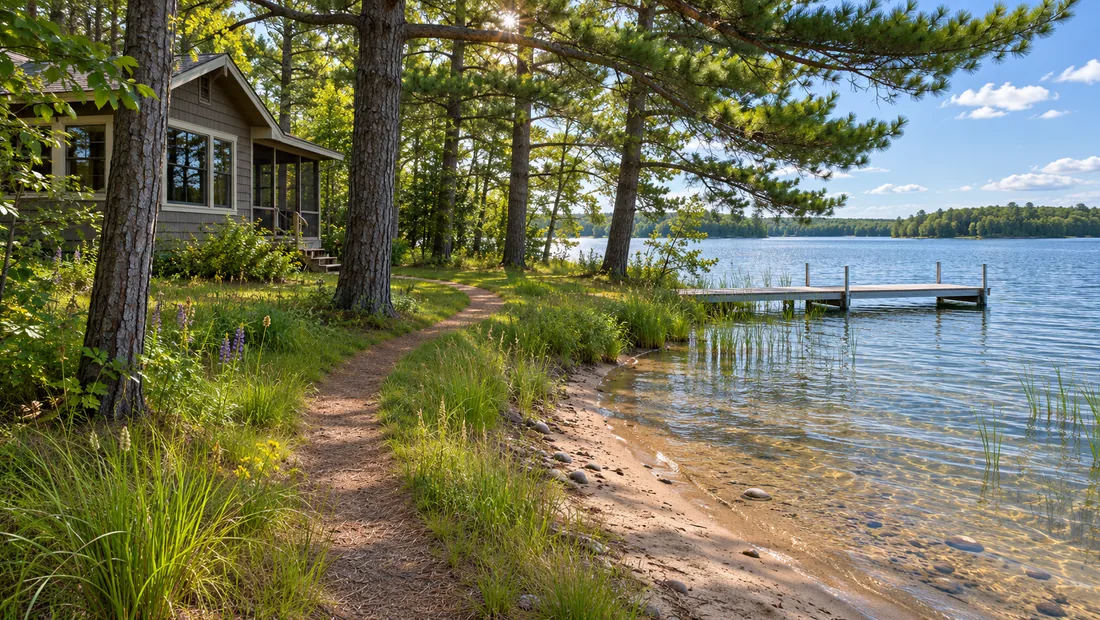
Think about the trips you make with towels, fishing gear or a cooler. A clear path and a dependable place to step onto the dock make the shore easier to live with. The rest of the frontage can have a different job. Existing plants can hold the soil, give the water a softer edge and keep some shade on the bank. Walk the path with the people who use it most and see which part of the approach really needs attention.
Look at your view from the places you sit. From the deck, you may want to see across the lake. At the water, you may like having some cover and shade around you. Those two things can live on the same property. A planting plan can keep a view open from a favorite chair and give the exposed ground beside the path more cover. A good plan should account for how tall the plants will be when they mature and how much care you want to give them.
Let the site guide the planting
It is worth finding out what is already growing before buying anything. The sunny ground by the dock can be very different from the soil beneath the trees, even a few steps away. A plant that flourishes in one spot may struggle in the other. Ask about locally suited plants for both the drier ground and the damp edge. If the slope is steep or ice and waves reach it hard, get someone to look at the site before deciding what ought to go there.
You can start with a small spot and see how it works through a season. Notice which plants establish, where people naturally walk and where you still see bare ground after the rain. That lets you choose the next piece of the project based on what happened. The Whitefish Area Property Owners Association has a local restoration program and examples that can help you picture what a planted edge looks like on the Chain.
Give the shoreline room to change
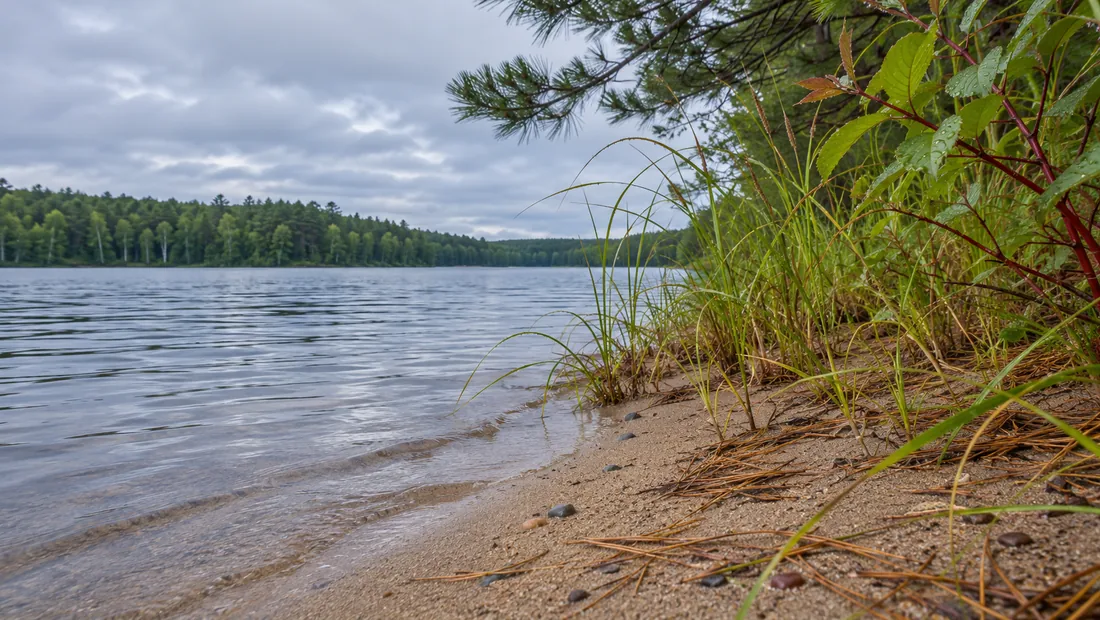
It is easy to remember how a beach looked in July and expect it to look just that way after ice-out. Wind, waves and ice can shift sand and leave a bank uneven. Look at the shore more than once before deciding how much work it needs. If erosion threatens a structure or makes the route to the water difficult, take photos and talk to the agency and someone who understands local shoreline conditions. A short visit in the right season can explain more than a photo taken while the lake is calm.
Keep an eye on the places people reach for the same shortcut. A bare stripe down the bank may tell you that the path starts too far from where the family gathers. Before widening it or adding steps, sketch where you would like people to walk and where rainwater already flows. Show both lines to the person helping with the site. The path that feels most natural on foot may need a different approach if it also collects water from uphill.
Make the calls while the plan is still flexible
Draw what you have in mind and include what is already there. An address, a few dimensions and pictures of the waterline will make an early conversation with the zoning office easier. Ask the DNR if the work touches the bed of the lake, changes the dock or affects aquatic plants. The answer depends on the proposed work and the site. Knowing which agency to speak with early can save time when you start asking for estimates.
If you are buying a place that already has stairs, a wall or a dock setup you like, ask for records and verify what you could repair or replace. An existing feature tells you how someone has used the shore. The local authority can tell you what it would take to change it. It is also worth looking at what you would do if you kept everything just as it is for your first season. That gives you time to see how the property behaves during the year.
Make a short list of what matters in your first summer. You may want one good place to step into the boat and a clear path for someone who walks slowly. Those priorities give a contractor a better brief than asking for a complete redo. They also make it easier to weigh ideas that come up during a visit. If a proposal would remove plants or change the grade, ask what it would do to runoff and to the parts of the shore you plan to keep.
Leave an easy routine for the next visit
Put a brush or other cleaning gear where it is handy when the boat comes off the water. Check paddles, trailers and other gear as well as the boat. If you share a place with family or guests, show them where to walk to the dock and what to do before equipment goes to a different lake. Simple routines tend to stick when they fit the way people already spend the day.
Then take the walk again when there is no rain to follow and no project to plan. Sit where you can hear a little wind in the pines. The shore is part of how the place feels, whether you have been coming here for years or you are deciding what kind of lake home to look for. The Whitefish Chain lake guides can help you get to know the individual lakes and make time for another look from the water.