

Find your put-in on the Whitefish Chain
Choose a lake outing with an easy return to the car, or set up a shuttle for the Pine River. The WFC map marks the starting points. Use the DNR water trail map to navigate the river and find the take-out.
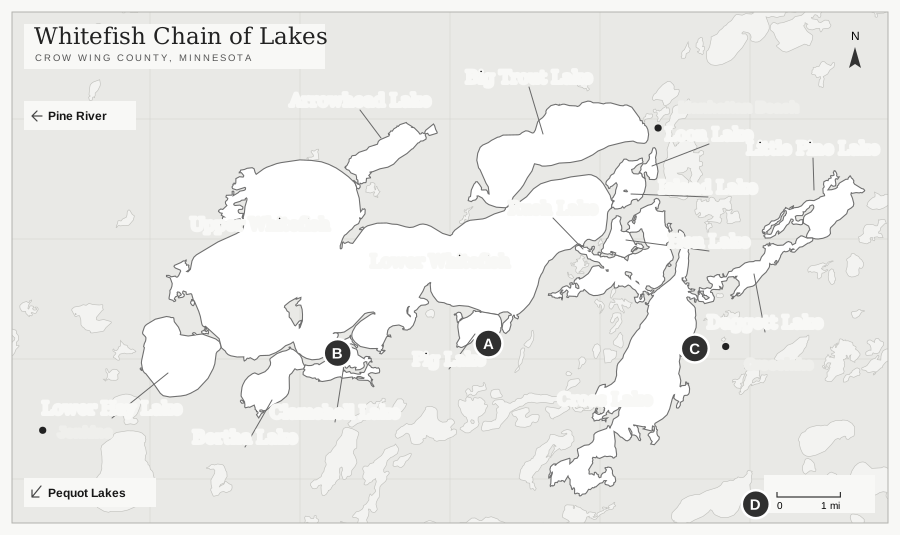
- APig Bay carry-in Directions
- BClamshell Lake public access Directions
- CCross Lake Recreation Area boat launch Directions
- DRock Dam carry-in Directions
- Harvey Drake take-out (off map) Directions
Four ways to spend time on the water
The first three outings start at verified public accesses. Pick your own turnaround based on wind, waves and traffic. The fourth follows a route published by the Minnesota DNR.
Pig Bay shoreline
Launch from the township carry-in on South Road. Follow the shore inside the bay while conditions allow, then return the way you came. The access inventory lists no designated parking lot.
Clamshell Lake shoreline
Start at the north-shore public access and choose the shore with the best protection for the day. Turn around on Clamshell before the channel to Bertha if you want to keep the outing short. Share the ramp with trailer traffic.
Cross Lake from the recreation area
Use the lake-side ramp at Cross Lake Recreation Area for a shoreline outing. Choose a direction after checking wind and boat traffic at the landing. Stay clear of the dam and its marked boundaries.
Pine River below Rock Dam
The Minnesota DNR day trip starts below Rock Dam at river mile 15.3 and ends at Harvey Drake at mile 0.9. Arrange a shuttle, check river levels and review the DNR map for rapids and hazards. The take-out lies southeast of this WFC map.
See the Crow Wing County public access map and the Pine River State Water Trail map.
Before you push off
Check wind and water
Look at conditions at your launch and along the return. For the Pine River, check current levels and the DNR route notes before committing to a shuttle.
Pick the right boat
Tell the outfitter where you plan to paddle, who is coming and how you will transport the boat. Ask about fitted life jackets, other included gear, and any shuttle arrangements.
Plan the return
Wear a life jacket, save the landing directions and tell someone ashore your plan. Keep a copy of the map you can read offline. If you're launching at a busy ramp, get your gear ready before moving to the water.
A morning close to the shoreline
Take the small boat out early and see what you notice when you can hear the water against the hull.
The lake looks different from the height of a canoe seat. You can see where sand gives way to darker water and where a leaning pine casts its shadow across the shallows. From the dock, you might have looked straight across the lake. Now there is a whole morning in the stretch of shore right in front of you. Pick a public landing, take a few easy strokes and give yourself time to see what is there.

Make the first outing close to home
There is a temptation to look at the whole Whitefish Chain on the map and choose a route that takes in several lakes. For a first paddle, think smaller. Pick a part of one lake that you would like to see from the water. At Pig Bay, that might mean following the shoreline and coming right back to the carry-in. At Clamshell Lake, it might be a short stretch from the public access, with the connection to Bertha left for another day. You still get the pleasure of seeing a place differently.
If you are staying at a resort or a rental with permission to use its waterfront, find out where the host wants guests to put in. A launch a few steps from where you are staying can make an early outing easier. When you are coming from town, a public landing gives everyone a clear place to meet. Bring the address or directions you plan to share with the group. Looking up the lake name alone can take different cars to different shores.
Give yourself a minute at the landing
Watch the water before unloading. Look past the first quiet patch for what is happening farther out. A flag at a dock or ripples farther along the shore can tell you something about what the return might feel like. If the wind is making it hard to imagine coming back comfortably, change the route or go another time. A short paddle you can enjoy all the way back is a better start to the day than a long one you feel obliged to finish.
Set out what you will actually need aboard and get life jackets fitted while everyone is on shore. At a trailer launch, unload from your rack and sort out bags away from the ramp so other people can get to the water. Agree on a turnaround before you leave, even if it is simply a time on your watch. If you are with a new paddler, give them a chance to try a few strokes and a turn near the landing before the group heads on.
There is a practical difference between a boat you like on the water and one you are happy to carry back to the car. That is worth checking if the landing is a walk from where you park. A canoe lets two people share the carry and make room for lunch or a spare layer. A kayak can suit someone who wants to move independently and stay close enough to have a conversation. If you are comparing canoe rentals, tell the outfitter about the launch as well as the people in your group.
Let the shore set the pace
When the water is settled, the little details come first. You might see the ripple from an animal in the shallows long before you see what made it. Where the land curves, a line of pines can give way to a sandy opening. Give loons and other wildlife room and keep paddling if your presence changes what they are doing. Much of the pleasure is in moving quietly enough to notice, then leaving the shore as you found it.
On Cross Lake, look for a shoreline route away from the busiest boat approaches. A channel that is easy to point to on a map can be narrow and active on a summer morning. If traffic makes the crossing feel uncomfortable, stay on your side of the water and enjoy the route you already have. You can use the Boating & Channels guide to learn how the lakes meet without making every connection part of the trip.
Try the same shoreline on two different mornings. On one, the woods may hold the light while mist lingers over open water. On another, you might be back at the landing before the first boats of the day come past. There is no need to make the second outing longer. Stay with the stretch that caught your eye the first time. If you want a break ashore, plan for a public landing or a place where you have permission to stop.
Give the river its own day
The Pine River is a different outing. With current moving you downstream, getting back to the vehicle takes planning before you launch. The DNR's Rock Dam to Harvey Drake route covers 14.4 river miles and passes through Crow Wing State Forest. It makes sense to treat it as a day trip. Check the current river report, where your group will put in and take out, and how everyone gets back. Save both directions while you have service and have the official water trail map with you on the water.
Read the notes about rapids before you go, especially if most of your paddling has been on lakes. A shorter shoreline outing may be the right call if the river is too high or low for your group. Ask an outfitter about conditions and whether a shuttle is available for the particular stretch you want. A beautiful day on the water can be a quiet hour close to town just as easily as a full day downstream.
At the take-out, it helps to know which side of the river you are looking for and what comes just before it. Check those details on the water trail map. A photo from your shuttle stop can help you recognize the landing later, especially if you will be arriving from a direction you have never seen. Keep the group together as you approach so everyone comes off the water at the same place.

Leave room for an unhurried return
Come back while you still have energy to spare. On a busy landing, gather your group and gear clear of the ramp before carrying things to the car. Check the hull and equipment for plants and clean and drain them before the next lake. Those few minutes at the end are part of spending a day here. They also leave you time to sit a little longer at the water before deciding where to go for lunch.
If you are looking at lake homes, try paddling from the part of the Chain that interests you, using a public access or the owner's permission. You will notice which direction you would go on an ordinary morning and where the boat traffic changes as the day gets warmer. Think through how you would carry the canoe to the water and where you would put it when you get back. Our lake guides can help you choose which shore to explore next.