


Make a day of the Chain.
Pick up a pontoon for an afternoon with friends, find a launch for an early fishing trip, or take the long way home through the channels. If you are putting down roots here, get to know the towns and services that make everyday life at the lake work. For more ideas, read Whitefish Chain - Notes from the Field.
Boating & Channels
Plan a route across the Chain and know what to check before entering a channel.
Public Boat Launches
Find a place to put in and plan for trailer parking before you leave.
Fishing the Whitefish Chain
Get to know the fisheries and find the current regulations for the water you plan to fish.
Boat Rentals
Compare rental operators, pickup locations and the kinds of boats available.
Boat Dealers & Marine Services
Find local help with buying, servicing and storing a boat.
Paddling
Find a starting point for a quiet morning on the water.
Shoreline Stewardship
Get to know the choices that help keep the Chain healthy.
Living Here
Get oriented to local services and the practical side of owning a lake place.
Life on the Whitefish Chain
The long way back to the dock
A day on the Whitefish Chain can take you from a quiet bay to miles of open water, then back to town in time for dinner. Here is how to make the most of it, whether you are here for a weekend or looking for a place to come back to.
Start with the kind of morning you want. If everyone is up early, take breakfast down to the dock and watch what the wind does before you decide where to go. If the lake is calm, you might take a canoe along the shore while the rest of the house is still asleep. Later, a pontoon gives the whole group room to stretch out, and you can spend the afternoon seeing where one lake gives way to the next. There is also a perfectly good day to be had with a book and a chair in the shade.
That range is what makes the Whitefish Chain of Lakes worth getting to know. Upper Whitefish Lake gives you room to look out across open water. Cross Lake gives you an afternoon on the water and an evening close to town. Between them, Rush Lake is part of the trip and worth slowing down for in its own right. The Whitefish Chain map and lake guides help put those places in relation to one another. Pick a stretch you want to see, then leave enough time to enjoy it.
Read the water before you pick a route
The lakes owe some of their connection to a piece of engineering you can see in Crosslake. The original Pine River Dam went into operation in 1886 at the outlet of Cross Lake. Raising the water linked lakes and channels into the reservoir we know today. The dam's present concrete form dates to the early twentieth century. Seen from shore, its row of arches gives some scale to a structure most people think about only when they look at a map.
On a first outing, an out-and-back trip gives you a chance to learn the water in both directions. If you start on Cross Lake, spend a while there before deciding whether to continue toward Rush Lake. Give yourself time to slow down at channel entrances and check markers and posted restrictions. Check a current navigation chart and the weather before leaving, and ask your marina or rental operator about the route for your boat. Wind, boat traffic and water levels can change how a trip feels from one day to the next.
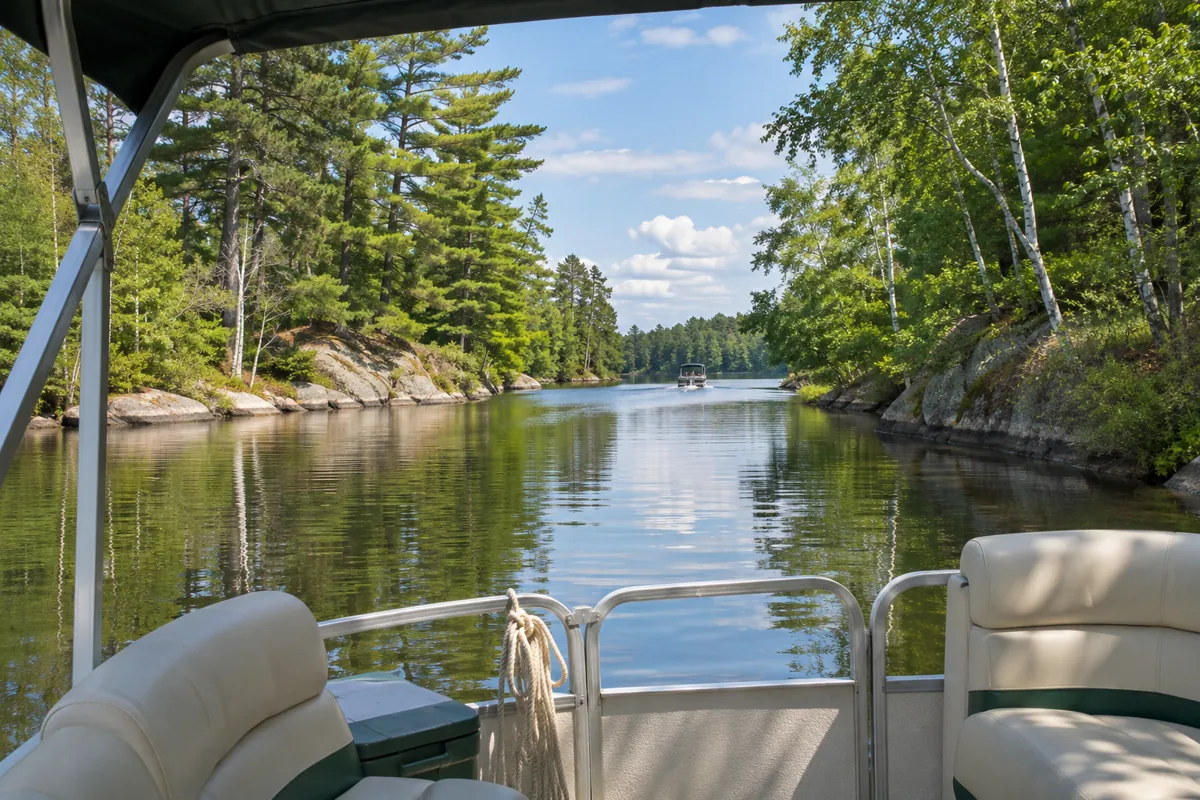
Where you start matters as much as where you go. The Minnesota DNR's shoreline survey mapped public launches on Whitefish, Cross, Big Trout, Clamshell and Lower Hay lakes. Use the public boat launch guide to choose a starting point, then confirm current access and trailer parking. A launch closer to the water you want to explore can leave you more time to fish, swim or stop for lunch.
If you are renting, ask where you will get aboard, how fuel is handled and what happens if the weather changes. Check how many people the boat can carry and whether the operator provides life jackets in the sizes your group needs. Agree on a return time early enough that you can enjoy the ride back. The boat rental directory is a place to compare local operators before you make the call.
Spend a morning close to shore
From a canoe or kayak, a familiar stretch of shore is worth a second look. You see where the reeds give way to sand, where trees lean over the water and how quickly the breeze returns when you round a point. Choose a short route near shore that fits the conditions, and wear a properly fitted life jacket. Give docks, swimmers, anglers and nesting birds room. When motorboat traffic builds or the wind comes up, a short outing that ends while everyone is still enjoying it is a good one.

Fishing offers another way to learn the Chain. The Minnesota DNR shoreline report identifies Whitefish Lake as a walleye and northern pike fishery and describes Big Trout Lake as managed and stocked for trout. Those are good starting points for choosing which lake to read up on. Before you pack the tackle, check the current Minnesota fishing regulations for the species, season and water you plan to fish. If several generations are along, consider an outing that leaves plenty of time to help a new angler get a line in the water.
At the end of the day, leave time at the ramp to check your boat, trailer and gear for plants or mud and drain water as required. The DNR's Clean In, Clean Out guidance covers everything from ballast tanks to canoes and bait containers. Back at the cabin, give the shoreline the same care. A patch of native vegetation can hold the bank and give wildlife cover. The Chain's quiet edges are part of what makes it such a good place to spend a morning.
Come ashore in Crosslake
For a first visit, plan one morning that can work in either direction. If the forecast cooperates, start on the water and leave town for later. If it turns windy, reverse the order. Seeing the dam from shore and looking across Cross Lake puts the boating map in perspective before you step aboard. A flexible plan also gives everyone a chance to join in. Someone who would happily spend the whole day fishing can meet the rest of the group for lunch, while a visitor who would rather stay on land can still spend the afternoon close to the lake.
Where you sleep can shape that plan. Compare a resort, a private rental and a campsite by asking what is included at the shore. A group bringing its own boat may need a slip and trailer parking. A family with young swimmers may care more about a place to enter the water comfortably. Ask about those details before reserving, especially if your idea of a good day is to leave the car parked until dinner.
Crosslake is a good place to spend part of a day on foot. At the Cross Lake Recreation Area by the dam, the Corps lists a swimming beach, picnic areas, camping and a playground. It works well for a group with different ideas about how to spend the afternoon. Bring a picnic if you want to keep the day open, or plan a stop in town and give yourself time to look around. The Crosslake community guide puts the recreation area in the context of the town and its nearby lakes.
At the Crosslake Historic Log Village, look for the restored 1949 Chris-Craft Sportsman that carried mail to lakeshore homes in summer. The village records that its pilot, Ben Knebel, also took resort guests along and brought groceries. The boat served Upper and Lower Whitefish and Trout Lake. It is a particularly good thing to see after a day on the water. Once you have spent time moving between lakes, it is easier to imagine what a mail route meant to the people waiting at the docks.
See what the Chain is like outside summer
Come in early fall and give yourself an afternoon to sit by the water. A walk through town, a long lunch and a little time on the dock can be enough for a weekend. Bring a layer for the ride back if you go boating. Shorter days and cooler water change what you should pack and how much daylight you have to get home. If you are booking a stay, check which services and rentals will be open on your dates.

Winter calls for a fresh look at conditions. From shore, you can enjoy a quiet day in town or see the lake from a favorite cabin window. Anyone planning to ice fish or travel on the lake should read the Minnesota DNR ice safety guidance and check conditions firsthand. Channels and moving water deserve particular caution. Tracks left by someone else give you very little information about what is beneath your feet.
Picture a Saturday of your own
If a visit turns into a home search, think back to the part of the day you wanted to stretch out. Perhaps you liked having open water in front of you, or you would rather have a sheltered place to take the canoe out before breakfast. On a tour, walk the route from the kitchen to the dock. Look at where you would keep wet gear and how you would carry a cooler back up. If a home uses shared access, ask how docking and shoreline use work. Those details tend to become part of every weekend.
Spend time on the road as well as the water. Make the trip into town from the property you are considering and ask how the road and house are cared for in winter. Our Living Here guide gives you a place to start with services and year-round questions. When you come back for another visit, try a different lake or return to the same dock in different weather. A few ordinary days here can tell you more about the place you want than a single perfect afternoon.