

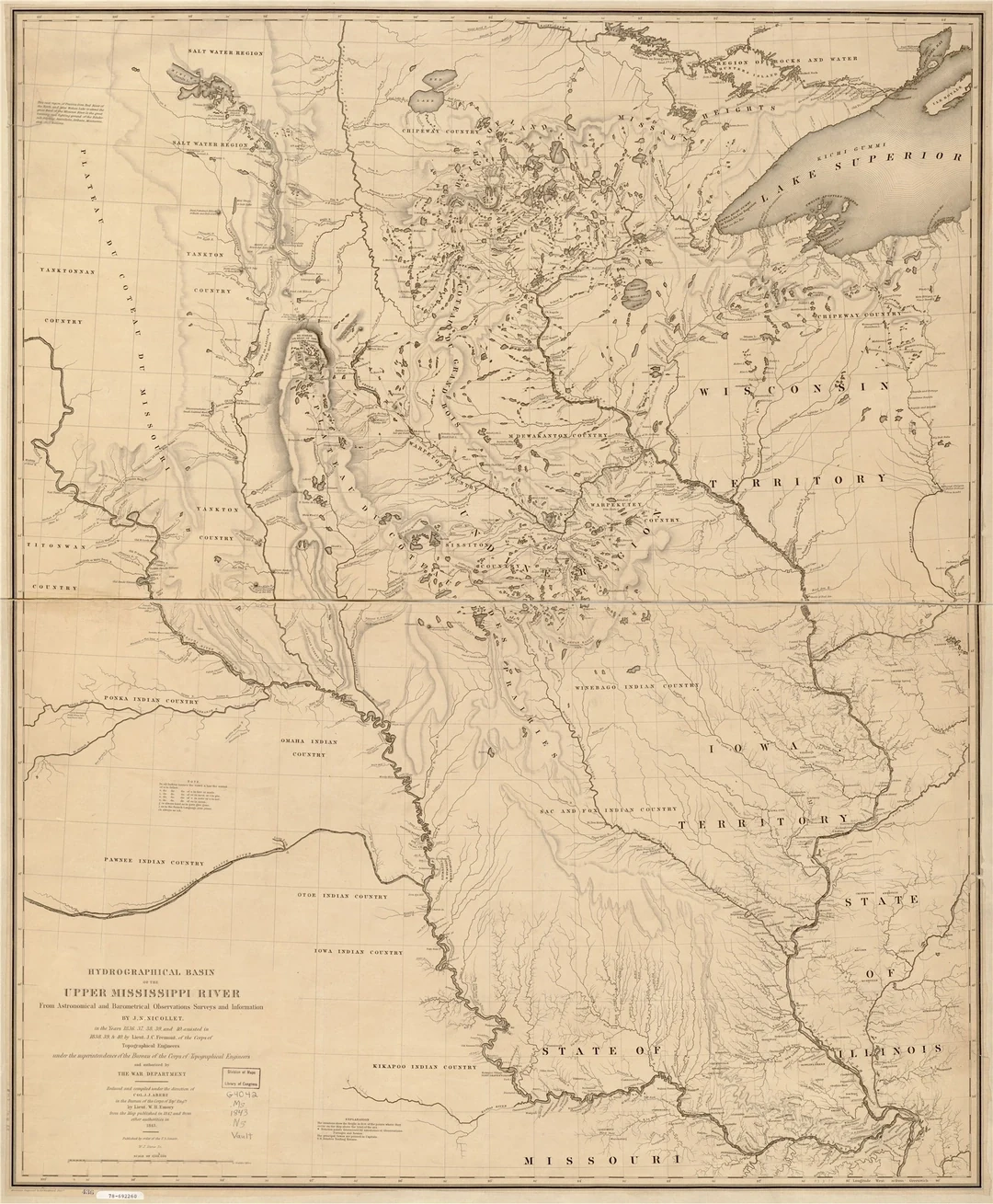
Look at an old map of the Chain and one familiar lake may appear under a name you have never heard. Rush Lake was Lake Plympton on Joseph Nicollet's map. Pig Lake still carries a name from the days when timber moved across the water. And Whitefish preserves a much older Ojibwe name in English.

Whitefish: an older name in an English form
Warren Upham's Minnesota Geographic Names, published by the Minnesota Historical Society in 1920, identifies White Fish Lake on the Pine River as the lake labeled Kadikomeg on Joseph Nicollet's map. Upham also records a longer form supplied by missionary and language scholar Joseph Gilfillan, translated there as "the place of white fish." The original volume's Crow Wing County chapter places the discussion on page 161.
Each writer recorded what they heard using the spelling conventions of their own day. The different forms are useful evidence of how the name reached the written record.
For visitors, the useful point is straightforward: Whitefish was not simply a name invented for a resort destination. It reflects a much older association between this lake and its fish.
When Rush Lake was Lake Plympton
Upham identifies another surprise on Nicollet's map: the water now known as Rush Lake was labeled Lake Plympton, honoring Joseph Plympton, a commander at Fort Snelling. Upham locates it between White Fish and Cross lakes, where the Pine River passes through the Chain.
That geographical description is important. It ties the old name to the right lake, rather than to one of Minnesota's many other Rush lakes. It also shows why researching a lake name involves more than finding a matching word in an index.
Upham records an Ojibwe name for this same lake as well, with a translation referring to a pine standing out of the water. The entries preserve several layers of naming: an Indigenous description, a cartographer's commemorative name and the familiar Rush Lake used today.
Use Rush Lake when planning a present-day visit. Lake Plympton belongs in the historical conversation, not in your navigation instructions.
Pig Lake and the timber waiting to move
The explanation for Pig Lake has less to do with a barnyard than with the work once carried out on the water. The Minnesota DNR's 2012 vegetation report describes a "pig" as a bundle of logs and identifies the lake as a place where timber was stored before transport.
That detail appears in the introduction to an aquatic plant study, an unexpected place to find local history. The report locates Pig Lake on the southeast side of Lower Whitefish, connected by a broad channel. Its historical explanation and lake map offer a useful starting point for understanding the name.
It is a small reminder that waters now associated with fishing, cabins and summer afternoons also had working roles. A short, curious name can keep a piece of that vocabulary alive.
One nearby name that needs a careful map check
Upham also identifies Lake Gratiot on Nicollet's map as today's Upper Hay Lake, near Jenkins. Upper Hay is a nearby lake outside the main Whitefish Chain; it is not Lower Hay, the Chain lake.
That difference is easy to lose in a retelling. If a historical account says simply "Hay Lake," pause before attaching it to a modern destination. Read the route, surrounding waterways and source date together.
What the old maps can tell us
Some lake-name explanations are supported by historical publications. Others circulate as family recollections or entertaining local tales. Both can be interesting, but they tell us different things.
A useful way to explore is to start with the present-day Whitefish Chain lake guides, then follow the older names into the history. You do not need to memorize every spelling to enjoy the connection. Simply knowing that the familiar map has changed gives the next trip across the water another dimension.
Questions about Whitefish Chain lake names
Why is Pig Lake called Pig Lake?
The Minnesota DNR connects the name with bundles of logs called pigs and the lake's use as a timber storage site.
Was Rush Lake once called Lake Plympton?
Upham's 1920 history identifies Lake Plympton on Nicollet's map as the lake now known as Rush Lake. It is a historical map name, not the name to use for current trip planning.
More Whitefish Chain stories
Names & Folklore
People & Places
Resorts & Summer Camps
- Manhattan Beach Lodge and Big Trout Lake Resort History
- Whitefish Chain Family Resorts: The Cabins That Survived
- Camp Foley's Stone Chapel on Lower Whitefish Lake
- Camp Knutson History: A Whitefish Chain Summer Camp
- Boyd Lodge History: From Fishing Cabins to Family Resort
- Whitefish Lake Resorts in 1924: A Railway-Era Vacation
- The Log Home Inside a Towering Pines Resort Cabin